
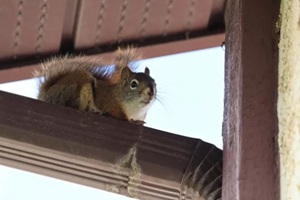
 Many homeowners around New Bedford hear their new attic tenants long before they find chewed trim or droppings, usually as they scrabble over the bedroom ceiling around 6 a.m. If you’re figuring out how to get rid of squirrels without hurting them, plan on two jobs done in one visit. The animals leave the attic first, and after that, the gaps they chewed or squeezed through get closed up.
Clues That Squirrels Are Living in Your Attic
From spring into fall, gray squirrels are busiest around sunrise and sunset, according to a squirrel fact sheet from the Massachusetts Division of Fisheries and Wildlife (MassWildlife). In winter, they shift to midday. So if the scratching starts while you’re making coffee and picks up again around dinner, a squirrel is the likely suspect.
If you’re hearing it at 2 a.m., you’re more likely hearing mice or rats, and that’s a rodent control job. Outside, take a slow lap around the house and look up. Gnawed edges on the fascia, soffits, or roof returns are what you’re hunting for. Also check the gable vent screens for any that look pried or bent.
In the attic, the nesting area tends to have matted or tunneled insulation, bits of shredded leaves, and scattered droppings. If you can spot daylight through a crack along the roofline, you’ve probably found their front door.
Damage Squirrels Leave Behind in an Attic
According to MassWildlife, a squirrel that settles into an attic or crawl space can chew wiring, tear up insulation, and damage the framing of the house.
Wiring close to a nest can have its protective jacket chewed down to the copper. Have an electrician inspect those runs once the squirrels have moved out, because exposed conductors are surrounded by dry framing and loose insulation.
Insulation near the nest gets shredded for bedding and trampled flat along their daily routes, with droppings mixed throughout. Cleanup is part of humane squirrel removal. The attic gets disinfected, and the worst of the soiled batts come out so new insulation can go in.
Structural damage begins when a squirrel chews a narrow gap at the fascia or a soffit corner until it can fit through. Once inside, it moves on to the rafters and the edges of the roof sheathing. Softened boards are usually replaced instead of patched, since a patch fastened to weak wood doesn’t hold up long against a squirrel’s teeth.
Setting a Trap Without Sealing the Hole
If you trap one squirrel and call it done, the hole and the old bedding are still there for the next one. Squirrels look for attics, crawl spaces, and sheds to nest and shelter in, MassWildlife notes, so an unsealed attic in the fall is a likely target.
Massachusetts Rules on Releasing Trapped Squirrels
Under MassWildlife guidance, you can release a trapped squirrel only on the property where you caught it. Driving it across town and letting it go elsewhere is against state law. An animal freed in your yard is still a few branches from the house, which is why openings should be sealed immediately.
Weak Spots in Do-It-Yourself Exclusion
Sealing up the one hole you can see from the driveway might not be enough. A second opening tucked behind a gutter or at another roof return is easy to miss from the ground, and squirrels may be using it. MassWildlife recommends heavy-gauge wire mesh or hardware cloth with half-inch openings for the repair. The agency also cautions against sealing a squirrel inside, because an animal shut in the attic can tear up a lot of material trying to escape.
Timing Removal Around Baby Squirrels
A gray squirrel litter in Massachusetts is small, typically two or three young, and the babies nurse for 8 to 10 weeks before they’re weaned. Adult females can have two litters a year, with one mating window in January and February and another from May through July. Pregnancy runs about 44 to 45 days.
A squirrel that mates in July would likely have her babies in late summer, and they could still be nursing in October or even November. Trap and remove the mother during that window, and the young she leaves behind can starve in the attic, with the smell drifting down into the rooms below. From spring through fall, a qualified, humane pest control service looks for a nest before closing the last opening.
The Four Steps of Humane Squirrel Removal
The process starts by inspecting the roofline, vents, and attic to mark each gap found and check for nests or young. A trustworthy professional should then walk you through what they found and give you a price before anything gets started.
Trapping and sealing happen on the same visit. Look for a company that traps the squirrels humanely, then covers the secondary gaps with heavy-gauge mesh. When the attic’s empty, they should seal the main hole and swap out the chewed wood around it. Last comes cleanup, which involves hauling out the droppings and nesting debris and putting down fresh insulation wherever the old stuff was soiled.
A final walkthrough should involve rechecking each sealed opening. MassWildlife also suggests trimming limbs within 6 to 8 feet of the house so squirrels can’t easily jump onto the roof.
Call Corey Davis to Seal Your Attic Against Squirrels

At Spartan Animal and Pest Control, owner and operator Corey Davis personally handles squirrel calls in New Bedford, Dartmouth, Fairhaven, Fall River, Westport, and the surrounding South Coast towns. The person you meet for the inspection is the same one who climbs the ladder to seal your roofline and cleans up the attic afterward. From the first phone call through the final walkthrough, Corey will work with you to humanely remove squirrels from your property.
Spartan backs animal removal work with a 3-year guarantee and doesn’t sell maintenance contracts. Call Corey at (508) 504-9255, schedule an inspection online, or send a note through the contact page describing the sounds you’re hearing upstairs.