
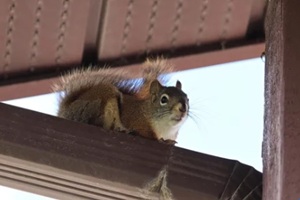
 Daytime scratching in the ceiling above your bedroom usually means squirrels have moved into the attic.
It’s one of the most common calls pest professionals field for squirrel removal from South Coast and Cape Cod homeowners, especially once the weather turns and squirrels start looking for a warmer place to nest.
Signs of Squirrel Activity in Your Attic
Squirrels are active during the day, which is the first clue that separates them from other attic wildlife. That ceiling noise has a rhythm to it if you pay attention. It shows up close to sunrise and again near sunset, never in the dead of night, which rules out the nocturnal crowd, raccoons and bats included. Three signs tend to show up together: daytime movement overhead, chewed openings along the roofline or soffit, and matted insulation where a nest has taken shape.
Daytime movement overhead rules out most other attic wildlife right away. Feeding happens early and again right before dark, and the squirrel disappears back inside once temperatures drop for the night. Pay attention to when you hear it, not just what it sounds like, and the pattern usually gives the animal away.
Chewed openings along the roofline or soffit show up for a simple reason. A squirrel’s front teeth grow for its entire life, so it wears them down by gnawing on whatever wood is within reach. An adult only needs a gap slightly wider than a broom handle to squeeze through.
Matted insulation where a nest has taken shape usually means young are present. That detail changes the removal timeline entirely, and it’s exactly where DIY attempts tend to go wrong.
How Squirrels Get Into a House
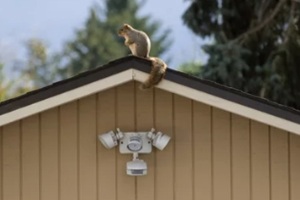
A gray squirrel doesn’t need much to find a way into an attic. An overhanging branch, a power line, or the rough texture at a corner of siding gives it enough grip to climb toward the roofline. Once it’s up there, the search for a gap starts immediately. Warped fascia boards, gaps around a vent stack, or a strip of trim that’s pulled loose from the structure are all appealing options. Wooded lots across Acushnet, Dartmouth, and Westport hand squirrels that same advantage, since mature trees standing close to a roofline cut the climb short.
Squirrel entry points are rarely a single hole. Give one a season in the attic, and it’ll typically work out two or three separate routes in and out. Block only the obvious one, and the noise won’t disappear; it’ll just show up somewhere else on the ceiling.
Most professional squirrel-removal jobs occur around two windows each year. Gray squirrels raise one litter while the weather is still cold and a second once summer sets in, and a nest found during either stretch usually has young inside that can’t yet leave on their own. Close that gap too soon, while they’re still inside, and the mother left outside won’t just give up. She’ll gnaw a fresh opening a few feet from the one that just got sealed.
Why DIY Squirrel Removal Often Backfires
 Most homeowners dealing with a squirrel problem reach for a trap from the hardware store first. The animal gets caught, and then there’s nowhere to release it legally. State law prohibits releasing trapped wildlife at another location, which means that approach only addresses what’s directly in front of you, not what’s actually causing it.
Closing the hole once the squirrel’s gone for the day may look like the job is finished. Yet, a squirrel that’s spent weeks building a nest doesn’t give up on it, and it’ll often gnaw a fresh opening instead of returning to the old gap. That turns one entry point into two. Attic wildlife removal must include exclusion work timed after the animal is confirmed to be removed, not scheduled around convenience.
What Professional Squirrel Removal Involves
The best approach is a thorough, four-step process, including inspecting the property, writing an estimate, handling removal and exclusion, then closing out the job with a final walkthrough.
Inspection and Estimate
This should involve a careful inspection of the attic and the exterior roofline to find every entry point, not just the one making noise, and then providing a written estimate before any work begins.
Removal and Exclusion
Look for professionals who remove squirrels humanely and never exterminate them inside the home. It’s also important that the professional seals every gap identified during the inspection in the same visit, not as a follow-up call.
Final Walkthrough
That final visit does two things. It confirms every seal is holding, and makes sure nothing’s still moving around up there. Skip it, and you’ve got a temporary fix instead of a permanent one.
Keeping Squirrels from Coming Back
The trees and rooflines that let squirrels onto a house in the first place are exactly where prevention needs to start. Cut back the limbs hanging closest to the roofline, and a squirrel loses its easiest on-ramp. Swap out thin vent screens for something heavier gauge, and a sealed gap actually has a shot at staying that way.
None of this replaces professional exclusion once squirrels are already inside. Prevention keeps entry points from reopening once they have been sealed. It doesn’t get an existing nest of squirrels, or their young, safely out.
Schedule Squirrel Removal With Spartan
 If you’re hearing movement in the attic during the day, don’t wait for it to turn into chewed wiring or damaged insulation. Trust Spartan Animal and Pest Control for a lasting, professional removal.
You can call Corey Davis, owner and operator, at (508) 504-9255 or schedule an inspection online, and he’ll walk the roofline with you, find every entry point, and handle the humane squirrel removal and exclusion himself from start to finish, backed by a three-year guarantee on the work. You can also reach the team through the contact page with questions before booking.