
 Have you seen mice around your property? Do you hear scratching or squeaking? Maybe you have noticed droppings or damage to your food packages, such as holes chewed into boxes. All these signs can indicate that at least one mouse has chosen your home as its own. Fluctuating weather can push mice to seek shelter indoors, and knowing how to prevent mice during seasonal change is important for keeping your home secure against an infestation.
Seasonal mouse activity depends on the weather outside and on the resources your property provides for these opportunistic rodents. As the climate shifts, expect the behavior patterns of wild animals to do so as well.
Here are the basics of seasonal mice behavior as well as your best strategies for rodent control during seasonal shifts.
Key Takeaways
|
Why Mice Change Their Behaviors With the Weather
Mice are incredibly sensitive to their environments. They are easy prey for a wide variety of animals, and drastic changes such as sudden cold fronts or heat waves can threaten them. As a result, mice can pivot on a dime when it comes to seeking new shelter as soon as the weather threatens to change.
Temperature drops and even storms alter mouse behavior, so you might suddenly notice signs of mice when none were present before. Some of the main reasons why mice increase in homes concurrently with weather changes include the following:
Safety
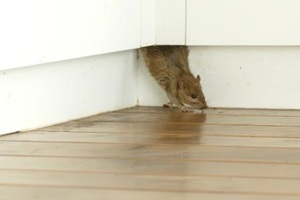
Mice succumb to predation, extreme temperatures (hypothermia and overheating), dehydration, starvation, and more frequently. To decrease the risk of these situations, they may seek safety inside a more defensible structure, such as a human home. Storms and weather changes can intensify the conditions that cause these risks, which means that if mice can anticipate a change, they will act early to minimize threats.
Suppose, for instance, that winter is coming. Food sources for most animals, prey and predator alike, will become scarcer, and changes in vegetation may remove camouflage and hiding places for mice. Thus, as the weather starts to turn cold, mice often retreat into houses where they can hide in cupboards, walls, and garages.
Comfort
Like most animals, mice prefer to seek out comfort where possible. If a warm, quiet, safe hiding place is available, they will tend to prefer it. That means when storms usher in a cold front, get their nests wet, or create an inhospitable environment, they are often on the move. And once they find a comfortable place (your house), they are unwilling to leave.
Resources
Resources are rarely abundant for wild animals, or at least not for long. Weather changes, such as the transition to winter, can eliminate or even most of a mouse’s food sources. To combat this risk, mice may begin to move into human houses as the weather turns, but before harsh temperatures truly set in. This gives them free access to human supplies, such as boxed food and discarded trash.
Why Early Detection Matters
Mice reproduce quickly; a single female can produce upwards of 140 pups per year. Thus, if you have a mouse in your home, it may be very little time before you have an infestation of mice in your home. Early detection allows you to respond before a colony can enmesh itself into your house’s structure, where they are harder to remove because they repopulate faster than you can trap them.
How to detect mice before an infestation starts
As the weather starts to change, take some time to evaluate your property. Look for gaps or cracks, especially around exterior fixtures (e.g., where your water pipes enter the house), doors, windows, and the garage. Mice can easily squeeze through spaces as small as a dime, making it particularly challenging to detect these vulnerabilities. Look along baseboards and in the backs of cabinets for signs of mice, such as droppings the size and shape of rice. If you are having difficulty spotting mice’s entry points, or if you want a second set of eyes to make sure your home is secure, contact a professional team with years of experience.
Get Help With Mice on Your Property
 If you suspect that mice are moving into your home as a result of storms or weather changes, do not wait until you see a mouse or discover more evidence of their existence.
Acting quickly is the best way to stop an infestation before it becomes difficult to manage. Contact Spartan Animal & Pest Control to get help with mice, locate and close entry points, or create a customized strategy to handle rodents on your property.